
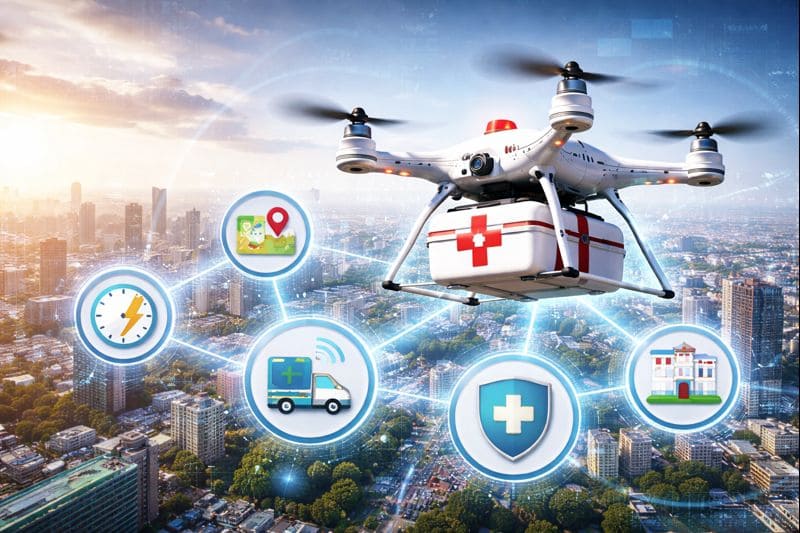
The global ambulance service market is developing at a fast pace. According to research, it is projected to grow to $94,204.9 million by 2031 due to rising chronic diseases and accidents, increased demand for emergency medical solutions, and an aging population.
Medical drones are also driving market growth by improving the delivery of medical emergency services.
By leveraging the flexibility, speed, and agility of drones, ambulance services can reduce costs, improve response times and offer better patient results, further contributing to the growth of the global ambulance services market.
Drones offer several benefits, making them a transformative technology for emergency medical service teams. That said, let’s have a look at the benefits of using medical drones:
Medical Drones Help with Medical Surveillance
The rising population has increased calamities and accidents, causing large-scale damage to people and properties. Further, traffic and other obstacles make it difficult for rescue teams, like military and ambulance units, to provide timely care and treatment.
In such situations, drones for the police ambulance or other ambulances with inbuilt sensors to monitor and capture a patient’s data can be very useful. These air transport systems can easily reach inaccessible locations faster, with cloud backup for storing and retrieving patient data.
They also send facts and figures to healthcare professionals like paramedics and hospital staff making it easier to offer urgent medical treatment.
The information is generally patient vitals, like heart rate, respiration rate, SpO2, blood glucose levels, and body temperature. Advanced technology, like embedded systems, micro-electrical mechanical systems, and the Internet of Things, in these medical drones helps to track and monitor vitals without human intervention.
While a cloud-based IoT application is used to visualize and examine real-time data from the drone sensors, an OTP or one-time password is used for data protection from hackers. Once available data is collected and examined, doctors and physicians control the drone remotely to offer instant medical assistance, like identifying the right position for defibrillator pad placement.
Drone Technology Accelerates Emergency Response Time
Medical drone technology is increasingly being used to deliver medical supplies, like blood, medicines, and defibrillators, to hard-to-reach and remote areas on time. In most cases, it can take hours to get medical supplies to these areas, and that’s where medical drones make a difference by accelerating emergency response times.
Besides these, medical drones can easily avoid transportation hurdles, like blocked roads and traffic jams in urban areas, and fly directly to patients stranded in congested regions.
Even medical teams can use these devices to deliver required items before professionals arrive. This allows patients to receive instant treatment instead of waiting, perhaps for an extended time, for help to arrive.
Scale Efficiently While Supporting Digital Transformation
Medical response teams must monitor shifting populations, especially in areas with heavy tourism and seasonal changes. For instance, consider the mountain regions that draw large numbers of vacationers during summer but clear out during the winter. In such situations, emergency response teams can strategically place more drones in these regions for faster casualty assessment when disaster strikes.
Further, they can scale down the drones when the population decreases in these regions during the off-season.
Medical drones can also help manage substance abuse and heat stroke casualties at large events, such as festivals and fairs. The medical teams can add drones in these settings during ongoing events and scale down when they conclude.
Medical response teams also need to be constantly on the edge of using innovation and technology to provide the best possible treatment. Since drones are affordable, simple, and effective technology, they make the best options for medical teams of all sizes.
Incorporating drone technology is a great way to modernize an emergency response fleet, making medical response more flexible, efficient, and resilient.
Improve Battlefield Safety and Aid Disease Control
Offering emergency medical response to military personnel can be challenging, especially during live combat with several team members. Often, medical teams need to put their own lives at risk while transporting supplies and offering emergency care to wounded soldiers.
Thanks to medical drone technology, emergency response teams can rush required supplies to military personnel without crossing the combat zones directly. This approach helps them transport critical things, like medicine and bandages, while reducing the risk of further harm or injury.
Further, healthcare drones are also increasingly used to identify, prevent and diagnose disease outbreaks. Recently, medical drones have been proposed as an effective means of mosquito control. A research program by the London School of Hygiene and Tropical Medicine involves using drones with thermal cameras to track macaques and examine their transmission from animals to human beings.
Such drones can also help map land types and places while analyzing how varied habitats may affect the dispersion of people and which macaques and mosquitoes can lead to infection risk.
Expand Operations
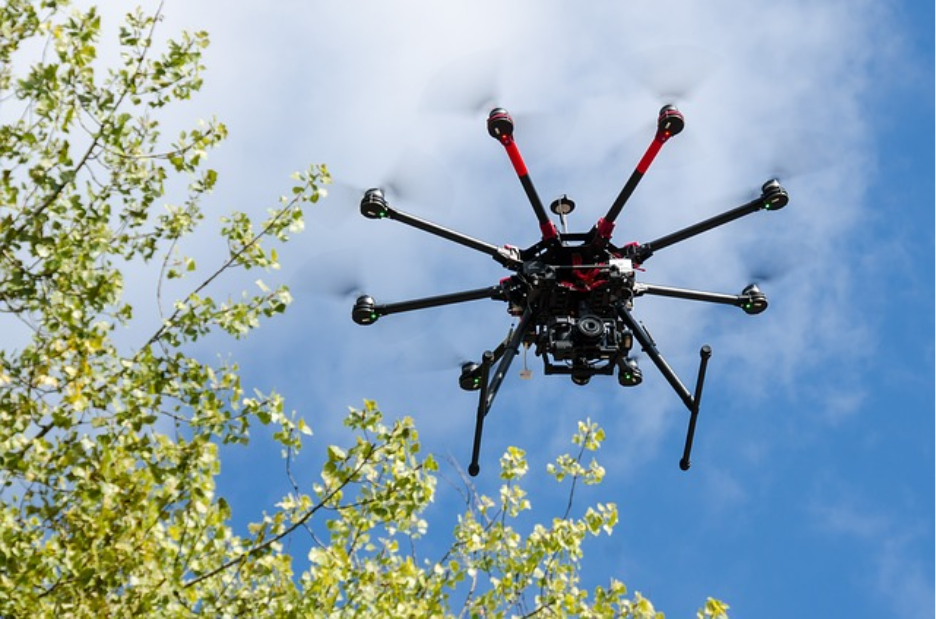
On-road ambulances can be expensive and require medical staff, technicians, and human operators, making it difficult for hospitals to expand their footprints by adding new units. Conversely, medical drones are more affordable and need only a few professionals.
Hence, hospitals can easily use drones to cover more ground by expanding their operations, thus serving the nearby communities more efficiently.
Conclusion
While medical drone technology might seem like future technology, it is already in use. Many healthcare units are using this technology to gather data and improve their chances of survival. And as the cost of drones drops, technology is becoming increasingly popular and improving.